- Posts: 9777
- Thank you received: 221
- Forum
- Life Up the Hill
- Scanner & Emergency Info, Weather Forecasts
- Understanding Severe Weather Watches and Warnings
Understanding Severe Weather Watches and Warnings
- MountainTownAlerts
-
 Topic Author
- Mountain Legend
-

Less
More
21 Apr 2014 13:37 - 27 Aug 2016 14:36 #1
by MountainTownAlerts
Understanding Severe Weather Watches and Warnings: Colorado Severe Weather Awareness Week
The National Weather Service sees the potential for severe weather and a stream of weather information flows from the National Weather Service forecast offices to you.
Each National Weather Service forecast office* has a web site, a facebook page and a twitter feed where you can find graphical weather stories which highlight upcoming weather hazards. The Hazardous Weather Outlook, a text product, it is also available which highlights weather hazards sometimes seven days in advance.
The Storm Prediction Center in Norman, Oklahoma also forecasts the chance for severe weather across the country several days in advance. These outlooks will tell you if there is a chance for severe weather and if you are in a slight risk, moderate risk or high risk area for severe weather.
If severe weather becomes likely within six hours a watch will be issued alerting you to the increased risk for severe weather. If you are in or close to the watch area you should plan where to go for shelter if severe weather occurs. If high wind is a threat tying down or bringing loose objects indoors would be a wise move. If large hail is a threat protecting your vehicle would be a good idea.
Then forecasters at the local National Weather Service office will monitor satellite and radar data and collaborate with severe weather spotters. Forecasters will issue warnings to alert you of the imminent severe weather threat. The warnings are sent out in many different ways in order to reach the most people possible.
A warning is an urgent message telling you that severe weather or flooding is imminent or is occurring. Warnings are usually issued for an area smaller than a county.
A severe thunderstorm warning is issued for wind gusts of 58 MPH or higher or for hail one inch in diameter or larger.
A tornado warning is issued when a tornado is imminent or occurring.
A flash flood warning is issued for rapidly developing life threatening flooding.
Before and during severe weather you can receive watches, warnings and advisories on NOAA all hazards weather radio.
Most weather radio receivers have a built in tone alert which is activated by the national weather service when watches and warnings are issued. You will also see warnings on the internet, your smartphone with wireless emergency alert (WEA) messages or hear them on your local radio or television stations.
Do not be caught off guard. Know how to receive watch and warning information and know what to do when severe weather threatens. Specific safety information will be available each day of this Colorado Severe Weather Awareness Week.
This guest blog written by Tom Magnuson, Warning Coordination Meteorologist, National Weather Service, Pueblo, Colorado.
Posted by COEmergency Colorado at 4/14/2014 08:00:00 AM
*For our area, our local National Weather Service office is the Denver/Boulder office:
Website: http://www.crh.noaa.gov/bou/
Facebook: https://www.facebook.com/US.NationalWea ... oulder.gov
Twitter: https://twitter.com/NWSBoulder
Other Useful links/info:
Public Information Officer Contact:
Micki Trost, 303-472-4087 (cell)
https://www.facebook.com/COEmergency
https://twitter.com/coemergency
http://www.dhsem.state.co.us/ - Division of Homeland Security & Emergency Management for the State of Colorado
https://www.readycolorado.com/
Jefferson County:
Jeffco Sheriff Website: http://jeffco.us/sheriff/
Jeffco Sheriff on Facebook: https://www.facebook.com/JeffersonCountySheriff
Jeffco Sheriff on Twitter: https://twitter.com/jeffcosheriffco
Jeffco Sheriff Blog: http://jeffcosheriff.blogspot.com/
Sign up for Jeffco Sheriff email alerts
CodeRED Emergency Notifications
Smart 911
Listen to Live Scanner Feeds Online: http://www.broadcastify.com/
Jefferson County: http://www.broadcastify.com/listen/ctid/270/?rl=rr
Park County: http://www.broadcastify.com/listen/ctid/287/?rl=rr
The National Weather Service sees the potential for severe weather and a stream of weather information flows from the National Weather Service forecast offices to you.
Each National Weather Service forecast office* has a web site, a facebook page and a twitter feed where you can find graphical weather stories which highlight upcoming weather hazards. The Hazardous Weather Outlook, a text product, it is also available which highlights weather hazards sometimes seven days in advance.
The Storm Prediction Center in Norman, Oklahoma also forecasts the chance for severe weather across the country several days in advance. These outlooks will tell you if there is a chance for severe weather and if you are in a slight risk, moderate risk or high risk area for severe weather.
If severe weather becomes likely within six hours a watch will be issued alerting you to the increased risk for severe weather. If you are in or close to the watch area you should plan where to go for shelter if severe weather occurs. If high wind is a threat tying down or bringing loose objects indoors would be a wise move. If large hail is a threat protecting your vehicle would be a good idea.
Then forecasters at the local National Weather Service office will monitor satellite and radar data and collaborate with severe weather spotters. Forecasters will issue warnings to alert you of the imminent severe weather threat. The warnings are sent out in many different ways in order to reach the most people possible.
A warning is an urgent message telling you that severe weather or flooding is imminent or is occurring. Warnings are usually issued for an area smaller than a county.
A severe thunderstorm warning is issued for wind gusts of 58 MPH or higher or for hail one inch in diameter or larger.
A tornado warning is issued when a tornado is imminent or occurring.
A flash flood warning is issued for rapidly developing life threatening flooding.
Before and during severe weather you can receive watches, warnings and advisories on NOAA all hazards weather radio.
Most weather radio receivers have a built in tone alert which is activated by the national weather service when watches and warnings are issued. You will also see warnings on the internet, your smartphone with wireless emergency alert (WEA) messages or hear them on your local radio or television stations.
Do not be caught off guard. Know how to receive watch and warning information and know what to do when severe weather threatens. Specific safety information will be available each day of this Colorado Severe Weather Awareness Week.
This guest blog written by Tom Magnuson, Warning Coordination Meteorologist, National Weather Service, Pueblo, Colorado.
Posted by COEmergency Colorado at 4/14/2014 08:00:00 AM
*For our area, our local National Weather Service office is the Denver/Boulder office:
Website: http://www.crh.noaa.gov/bou/
Facebook: https://www.facebook.com/US.NationalWea ... oulder.gov
Twitter: https://twitter.com/NWSBoulder
Other Useful links/info:
Public Information Officer Contact:
Micki Trost, 303-472-4087 (cell)
https://www.facebook.com/COEmergency
https://twitter.com/coemergency
http://www.dhsem.state.co.us/ - Division of Homeland Security & Emergency Management for the State of Colorado
https://www.readycolorado.com/
Jefferson County:
Jeffco Sheriff Website: http://jeffco.us/sheriff/
Jeffco Sheriff on Facebook: https://www.facebook.com/JeffersonCountySheriff
Jeffco Sheriff on Twitter: https://twitter.com/jeffcosheriffco
Jeffco Sheriff Blog: http://jeffcosheriff.blogspot.com/
Sign up for Jeffco Sheriff email alerts
CodeRED Emergency Notifications
Register with CodeRED Emergency Notification SystemThe CodeRED system calls numbers from two databases. One is the county’s 911 database, with all listed and unlisted land lines. If you have a land line, it is automatically included in this database.
The second is a new database of mobile phone and VoIP numbers — established in 2009 — whose owners have opted in to receive the calls. If you don’t have a traditional land line phone, or would like to receive a cell phone call in addition to the call on your land line phone, consider registering for this free service.
Smart 911
Create your safety profile by visiting the Smart 911 websiteSmart911 is a free service with which users create a safety profile by entering vital data they want made available about themselves, their family, their residence and even their pets.
Data given can include photos, and information regarding medical conditions, allergies, disabilities and/or special needs, home addresses of cell phone callers and floor plans to name a few.
Smart911 delivers this information automatically to dispatchers, who then enable responders to be more successful with access to critical health and logistical information before arriving at the scene of an emergency.
It's free, private and secure.
Listen to Live Scanner Feeds Online: http://www.broadcastify.com/
Jefferson County: http://www.broadcastify.com/listen/ctid/270/?rl=rr
Park County: http://www.broadcastify.com/listen/ctid/287/?rl=rr
Last edit: 27 Aug 2016 14:36 by MountainTownAlerts. Reason: fixed broken links
Please Log in or Create an account to join the conversation.
- MountainTownAlerts
-
Topic Author
- Mountain Legend
-
Less
More
- Posts: 9777
- Thank you received: 221
29 Dec 2024 17:11 #2
by MountainTownAlerts
Replied by MountainTownAlerts on topic Understanding Severe Weather Watches and Warnings
From NWS Denver/Boulder:
For Jeffco and Clear Creek County: www.smart911.com/smart911/ref/reg.action?pa=LookoutAlert
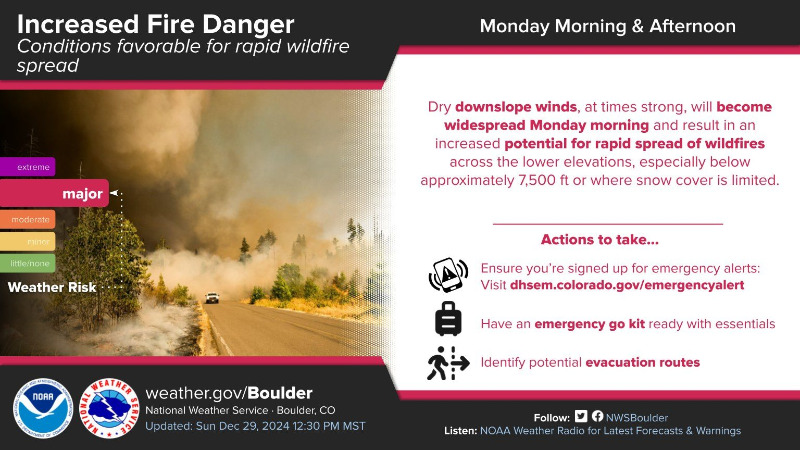
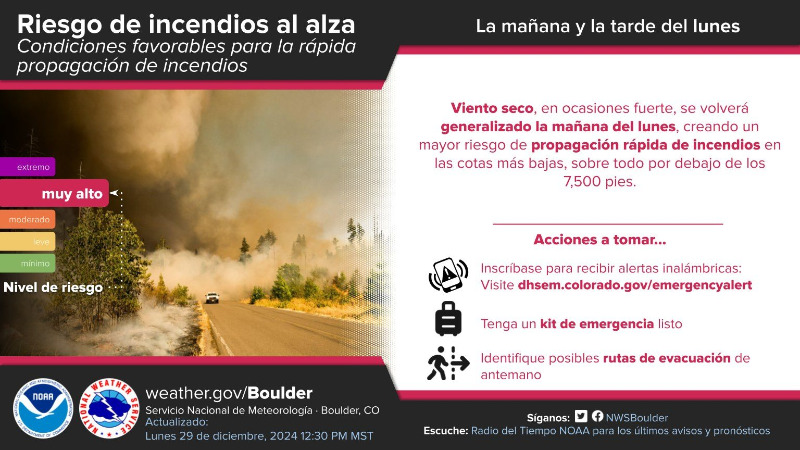
For Park County: www.parkcountyco.gov/97/CodeREDWith increased fire danger on the horizon, there are a few simple steps we can all take avoid being unprepared in the event of a wildfire.
This begins with making sure you're signed up to receive emergency alerts: dhsem.colorado.gov/emergencyalert .
For Jeffco and Clear Creek County: www.smart911.com/smart911/ref/reg.action?pa=LookoutAlert
Please Log in or Create an account to join the conversation.
- MountainTownAlerts
-
Topic Author
- Mountain Legend
-
Less
More
- Posts: 9777
- Thank you received: 221
16 Dec 2025 21:31 #3
by MountainTownAlerts
Replied by MountainTownAlerts on topic Understanding Severe Weather Watches and Warnings
In light of tomorrow's Red Flag Warning, Fire Restrictions, and potential power outages to reduce wildfire risk, we thought it would be a good time for a refresher on steps to take to prepare for an emergency evacuation.
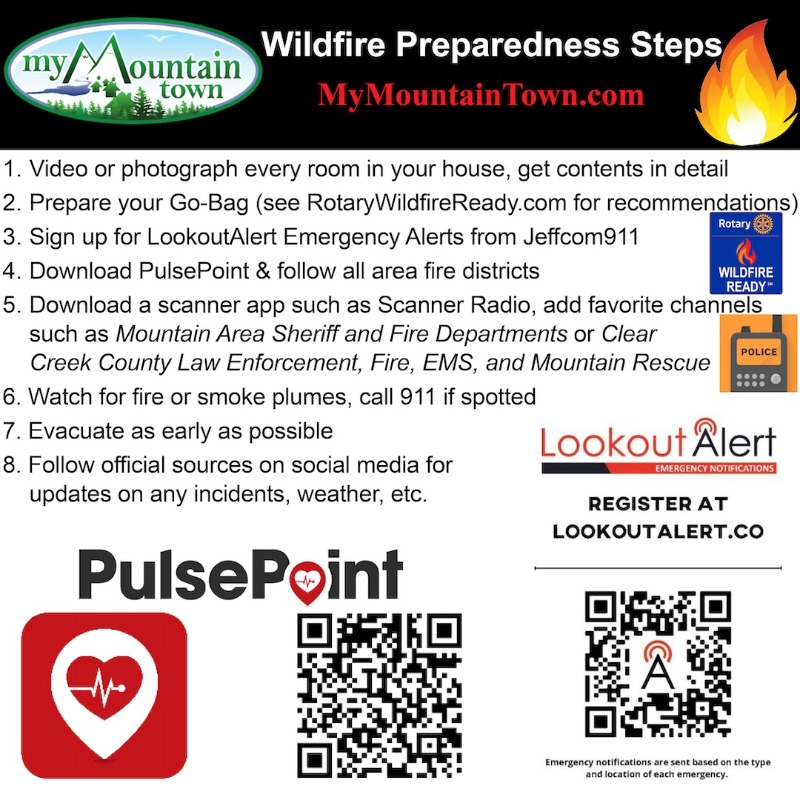
- Video or photograph every room in your house, making sure to capture contents in detail. If you have receipts for large purchases, include those as well. Recharge all of your medical equipment, electronics, and backup power banks. If you have a well, have backup water supplies.
- Prepare your Go-Bag - see Rotary Wildfire Ready's website or app for an excellent list and videos on how to prep your home.
-
Sign up for LookoutAlert emergency alerts
from
Jeffcom 911
for Jeffco and Clear Creek County, CodeRED for
Park County
- evacuation notices come from them.
- Download the PulsePoint Respond app and follow any or all of our mountain area fire districts. You can turn on notifications on calls they are sent out on for a first heads-up that something may be happening. Once you have this...
- Download a scanner app such as Scanner Radio (on Apple Store and Google Play store) and create a list of favorite feeds such as Mountain Area Sheriff and Fire Departments or Clear Creek County Law Enforcement, Fire, EMS, and Mountain Rescue. When you see the PulsePoint alert, turn on the scanner to hear what's reported.
- Watch for fire or smoke plumes (Jeffco Open Space has a great video on Spotting Wildfire Smoke ) and call 911 if seen.
- Evacuate as early as possible! If you feel uncomfortable, don't wait for an official evac notice, go ahead and leave. If everyone waits until the last minute, the roads will quickly become clogged delaying evacuations.
- Follow official sources on social media for updates on weather or any incidents that occur. Jefferson County Sheriff's Office, Jeffcom911, and any local fire districts are good ones.
Please Log in or Create an account to join the conversation.
- MountainTownAlerts
-
Topic Author
- Mountain Legend
-
Less
More
- Posts: 9777
- Thank you received: 221
16 Dec 2025 22:34 #4
by MountainTownAlerts
Replied by MountainTownAlerts on topic Understanding Severe Weather Watches and Warnings
From Jefferson County Government
General Tips:
Outage Kit Checklist:
Cooking/Eating during Public Safety Power Shutoff (PSPS):
If you rely on medical equipment that requires electricity:
Prepare Your Home for Public Safety Power Shutoff (PSPS):
What to Know About Generators:
Tips from Jefferson County Public Health:
General Tips:
- Stay away from downed power lines and report them
- Access a map of outages in your area
- Put an outage kit together
- Have a family plan
- Keep elderly safe, check on your neighbors
Outage Kit Checklist:
- Flashlights
- Batteries
- Portable charger
- A phone that does not require electricity
- Non-electric alarm clock
- Bottled water and non-perishable food
- First aid kit
- Extension cords for partial outages
- Battery-powered radio or television
Cooking/Eating during Public Safety Power Shutoff (PSPS):
- While cooking, be sure there is adequate ventilation and never use charcoal indoors. You can use a natural gas stove or oven.
- A freezer that is half-full will hold food safely for 48 hours. Do not open the freezer door if you can avoid it.
- Pack milk, meat, fish, eggs, and other spoilable food into a cooler with ice.
If you rely on medical equipment that requires electricity:
- Charge all your devices now
- Decide how long you can safely be without power
- Plan ahead for where you will go for assistance or evacuation if needed
Prepare Your Home for Public Safety Power Shutoff (PSPS):
- Set your fridge and freezer to the coldest setting to keep food cold
- Turn off or unplug electrical appliances that could surge when power returns
- Practice opening garage doors without the electronic motor
What to Know About Generators:
- Emergency standby generators can supply electricity to your home or business during an outage
- Always run generators outside where there is adequate ventilation
- Improperly connected generators may re-energize lines that otherwise would be off, this could potentially electrocute crew members attempting to make repairs
Tips from Jefferson County Public Health:
- Plan for medical equipment during outages
- Charge medical devices, phones, and backup batteries
- Know your limits - decide how long you can safely be without power. Know how long devices and backup batteries will last. Talk with your provider or pharmacist about devices and refrigerated medications.
- Plan for backup power - know where you could go for power, help, or evacuation if needed. Plan alternate options for refrigeration, heating, or cooling.
Please Log in or Create an account to join the conversation.
- Forum
- Life Up the Hill
- Scanner & Emergency Info, Weather Forecasts
- Understanding Severe Weather Watches and Warnings
Time to create page: 0.189 seconds
sponsors