
- Posts: 1548
- Thank you received: 11
How to Win a War
- Arlen
-
 Topic Author
- Mountain Legend
-

Less
More
15 Oct 2011 08:51 #1
by Arlen
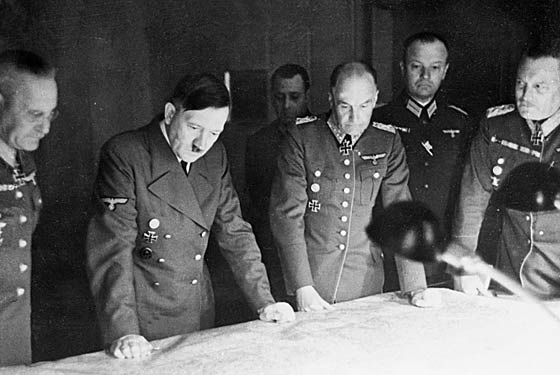
1. Play computer/online games!
2. Read the social media
3. Read the classics online
[center:30yy0dym]


 [/center:30yy0dym]
http://www.clausewitz.com/readings/OnWar1873/TOC.htm
[/center:30yy0dym]
http://www.clausewitz.com/readings/OnWar1873/TOC.htm
How to Win a War was created by Arlen
1. Play computer/online games!
http://nymag.com/news/features/22787/If you want to see the future of the war-games industry, it’s a good idea to check out the annual conference of darpa (the Defense Advanced Research Projects Agency) or to monitor the latest output of the Army’s Program Executive Office for Simulation, Training and Instrumentation. The problem is that the situations the Army wants to simulate today are very different from the ones experienced by soldiers in the early forties.
To the historian, in any case, tactics and the individual soldier’s battlefield experience are only some of the war’s many facets. Of more importance by far is the question of strategy. D-day was a decisive Allied victory, but not a preordained one. On the eve of the operation, Eisenhower was sufficiently conscious of the risks involved to draft the statement he would issue in the event of its failure.
2. Read the social media
http://www.myspace.com/htwawHow To Win A War
3. Read the classics online
[center:30yy0dym]
Please Log in or Create an account to join the conversation.
- Arlen
-
Topic Author
- Mountain Legend
-
Less
More
- Posts: 1548
- Thank you received: 11
15 Oct 2011 08:59 - 15 Oct 2011 09:40 #2
by Arlen
Replied by Arlen on topic How to Win a War
List of Military Strategies!
online
http://en.wikipedia.org/wiki/List_of_military_strategiesOffensive strategies
Attrition warfare - A strategy of wearing down an enemy to the point of collapse through continuous loss of personnel and matériel
Bait and bleed - A military strategy similar to the concept of divide and conquer
Battle of annihilation - The goal of destroying an opposing army in a single planned pivotal battle
Bellum se ipsum alet - A strategy of feeding and supporting an army with the potentials of occupied territories
Blitzkrieg - An attack that uses concentrated force and rapid speed to break through enemy lines, named after the German World War II strategy
Blockading - An attempt to cut off food, supplies, war material or communications from a particular area by force, usually taking place by sea
Clear and hold - A counter-insurgency strategy
Counter-offensive - A strategic offensive taking place after an enemy's front line troops and reserves have been exhausted, and before the enemy has had the opportunity to assume new defensive positions
Counterforce - A strategy used in nuclear warfare of targeting military infrastructure (as opposed to civilian targets)
Countervalue - The opposite of counterforce; targeting of an opponent's cities and civilian populations
Distraction - An attack by some of the force on one or two flanks, drawing up to a strong frontal attack by the rest of the force
Encirclement - Both a strategy and tactic designed to isolate and surround enemy forces
Feint - To draw attention to another point of the battle where little or nothing is going on
Flanking maneuver - Involves attacking the opponent from the side, or rear
Human wave attack - An unprotected frontal attack where the attacker tries to move as many soldier as possible into engaging close range combat with the defender
Interior lines - Placing ones forces in between the enemy forces and attacking each in turn in order to allow ones forces to have better communications and allows one to mass all of ones forces against a part of the enemies
Penetration - A direct attack through the enemy lines, then an attack on the rear once through
Pincer ambush - A "U"-shaped attack with the sides concealed and the middle held back until the enemy advances, at which point the concealed sides ambush them
Pincer maneuver - Allowing the enemy to attack the center, sometimes in a charge, then attacking the flanks of the charge
Raiding - Attacking with the purpose of removing enemy's supply or provisions
Refusing the Flank - Putting the minimal number of troops required to hold out against an enemy attack while the rest of the army launches a counterattack through the enemy flank
Scorpion Attack - A Pincer Attack that is supplemented by an air strike
Siege - Continuous attack by bombardment on a fortified position, usually by artillery
Shock and awe - A military doctrine using overwhelming power to try and achieve rapid dominance over the enemy
Turning maneuver - An attack that penetrates an enemy flank, then curls into its rear to cut it off from home
Defensive strategies
Defence in depth - A strategy to delay rather than prevent the advance of an attacker by buying time and causing additional casualties by yielding space so that the momentum of the attack is lost
Boxing maneuver - A strategy used to "box in" and force and attack on all sides at once
Withdrawal - A retreat of forces while maintaining contact with the enemy
Fortification
Fabian strategy - Wearing down an enemy by using attrition warfare and indirection, while avoiding pitched battles or frontal assaults
Military district, also known as Wehrkreis in German
Scorched earth - Destroying anything that might be of use to the enemy while retreating, or advancing
Turtling - Continuous reinforcement of an army until it has reached its full strength, then an attack with the now-superior force
Last edit: 15 Oct 2011 09:40 by Arlen.
Please Log in or Create an account to join the conversation.
- Arlen
-
Topic Author
- Mountain Legend
-
Less
More
- Posts: 1548
- Thank you received: 11
15 Oct 2011 09:03 - 15 Oct 2011 09:42 #3
by Arlen
Replied by Arlen on topic How to Win a War
Do you have a navy?
http://www.molossia.org/milacademy/strategy.html
MILITARY STRATEGY AND TACTICS
Military strategy and tactics are essential to the conduct of warfare. Broadly stated, strategy is the planning, coordination, and general direction of military operations to meet overall political and military objectives. Tactics implement strategy by short-term decisions on the movement of troops and employment of weapons on the field of battle. The great military theorist Carl von Clausewitz put it another way: "Tactics is the art of using troops in battle; strategy is the art of using battles to win the war." Strategy and tactics, however, have been viewed differently in almost every era of history. The change in the meaning of these terms over time has been basically one of scope as the nature of war and society has changed and as technology has changed. Strategy, for example, literally means "the art of the general" (from the Greek strategos) and originally signified the purely military planning of a campaign. Thus until the 17th and 18th centuries strategy included to varying degrees such problems as fortification, maneuver, and supply. In the 19th and 20th centuries, however, with the rise of mass ideologies, vast conscript armies, global alliances, and rapid technological change, military strategy became difficult to distinguish from national policy or "grand strategy," that is, the proper planning and utilization of the entire resources of a society--military, technological, economic, and political. The change in the scope and meaning of tactics over time has been largely due to enormous changes in technology. Tactics have always been difficult--and have become increasingly difficult--to distinguish in reality from strategy because the two are so interdependent. (Indeed, in the 20th century, tactics have been termed operational strategy.) Strategy is limited by what tactics are possible; given the size, training, and morale of forces, type and number of weapons available, terrain, weather, and quality and location of enemy forces, the tactics to be used are dependent on strategic considerations.
Strategic and Tactical Principles of Warfare
Military commanders and theorists throughout history have formulated what they considered to be the most important strategic and tactical principles of war. Napoleon I, for example, had 115 such principles. The Confederate general Nathan Bedford Forrest had but one: "Get there first with the most men." Some of the most commonly cited principles are the objective, the offensive, surprise, security, unity of command, economy of force, mass, and maneuver. Most are interdependent.
Military forces, whether large-scale or small-scale, must have a clear objective that is followed despite possible distractions. Only offensive operations--seizing and exploiting the initiative--however, will allow the choice of objectives; the offense also greatly increases the possibility of surprise (stealth and deception) and security (protection against being surprised or losing the possibility of surprising the enemy). Unity of command, or cooperation, is essential to the pursuit of objectives, the ability to use all forces effectively (economy of force), and the concentration of superior force at a critical point (mass). Maneuver consists of the various ways in which troops can be deployed and moved to obtain offensive, mass, and surprise. A famous example that illustrates most of these principles occurred during World War II when the Allied forces eventually agreed on the objective of defeating Germany first with a direct offensive against the European continent. Under a combined command headed by Gen. Dwight D. Eisenhower, they effectively massed their forces in England, deceived Germany regarding the point of invasion, collected intelligence on the disposition of German forces, and set the vast maneuver called Operation Overlord into motion.
Unthinking rigid attention to a principle of war, however, can be unfortunate. In the face of two Japanese naval forces, Adm. William Halsey's decision at Leyte Gulf not to divide the fleet (the principle of mass) led to the pitting of the entire enormous American naval force against a decoy Japanese fleet. Division of the fleet (maneuver) would still have left Halsey superior to both Japanese forces.
Last edit: 15 Oct 2011 09:42 by Arlen.
Please Log in or Create an account to join the conversation.
- Arlen
-
Topic Author
- Mountain Legend
-
Less
More
- Posts: 1548
- Thank you received: 11
15 Oct 2011 09:19 #4
by Arlen
Replied by Arlen on topic How to Win a War
Learn from the ancients!
http://www.ioffer.com/i/the-wiles-of-war-36-military-strategies-from-ancient-ch-472010454The Wiles of War 36 Military Strategies from Ancient China
Buy Now For $19.03
Free Shipping or Make Offer Get the best deal by making an offer!
Please Log in or Create an account to join the conversation.
- Arlen
-
Topic Author
- Mountain Legend
-
Less
More
- Posts: 1548
- Thank you received: 11
15 Oct 2011 09:36 - 15 Oct 2011 09:41 #5
by Arlen
Replied by Arlen on topic How to Win a War

Last edit: 15 Oct 2011 09:41 by Arlen.
Please Log in or Create an account to join the conversation.
- Martin Ent Inc
-

- Mountain Legend
-
Less
More
- Posts: 6540
- Thank you received: 0
15 Oct 2011 09:40 #6
by Martin Ent Inc
Replied by Martin Ent Inc on topic How to Win a War
Read the Art of War Sun Tzu.
and the above gun was used on ships as a close 1/4s weapon.
and the above gun was used on ships as a close 1/4s weapon.
Please Log in or Create an account to join the conversation.
- Arlen
-
Topic Author
- Mountain Legend
-
Less
More
- Posts: 1548
- Thank you received: 11
15 Oct 2011 09:48 #7
by Arlen
Replied by Arlen on topic How to Win a War
Is your army mobile?
http://ressources.ciheam.org/om/pdf/b13/95605343.pdf
FEEDING A CAMEL
[youtube:231jh27i][/youtube:231jh27i]
Feed requirements of the camel
File Format: PDF/Adobe Acrobat - Quick View
by AM HASHI - Related articles
studied in the dromedary camel using coarse roughages under stall-fed ... Iw. With these types of feeds, the camel's natural ability forselective browsing is ...
http://ressources.ciheam.org/om/pdf/b13/95605343.pdf
FEEDING A CAMEL
[youtube:231jh27i][/youtube:231jh27i]
Please Log in or Create an account to join the conversation.
- Arlen
-
Topic Author
- Mountain Legend
-
Less
More
- Posts: 1548
- Thank you received: 11
15 Oct 2011 09:54 #8
by Arlen
Replied by Arlen on topic How to Win a War
Keep Your Army Healthy
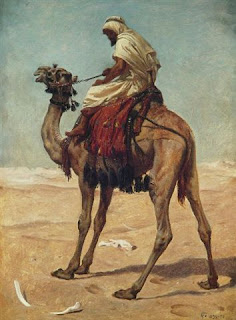
The Bacillus Subtilis Story - When Arabs ate camel dung as a cure for Dysentery
The bacillus subtilis was discovered by the Nazi German medical corps in 1941, toward the end of their African campaign. At the time, the German military victory was at its height. But the German high command became genuinely alarmed when hundreds upon hundreds of soldiers in North Africa suddenly began dying every week. Oddly, the Nazi soldiers weren't dying because of British General Montgomery's retaliatory bombs and shrapnel, but instead, they were dying of uncontrollable dysentery.
Of course, the Germans were aware that dysentery was caused by pathogenic (i.e. disease-causing) bacteria from local food and water sources. But in those days, there were no antibiotics. Sulfur was already on the market, but only in a topical non-ingestible form. So with no medication available with which to stop the plague of dysentery, the Nazis quickly began looking for other means to help their dying soldiers.
The German high command immediately sent out a contingent of scientists, physicians, chemists, biochemists, bacteriologists and other experts to help solve the problem. With typical German circumspection, these top experts reasoned that there must be a natural way to counteract the deadly bacteria causing the dysentery because, if there wasn't, the millions of Arabs living in the region would have been dead long ago.
Therefore, the Germans' first step was to closely scrutinize the native Arabs, and see whether or not they were affected by dysentery. What they discovered was that the Arabs also caught dysentery, but at the first sign of diarrhea [the #1 symptom of dysentery --- Ed.] the Arabs would do something quite incredible: They would immediately begin following around a horse or camel until it would drop its dung. Then, the affected Arab would pick up the warm dung droppings, and quickly gulp them down! This strange procedure effectively eliminated the dysentery almost overnight.
Once the good hygienic Germans finally recovered from the shock of seeing the Arab natives gulping down warm camel dung, they quickly realized that there must be something in the dung that somehow counteracted the harmful bacteria that caused the dysentery.
They questioned the Arabs, who told them that they had no idea why it worked, but that their fathers had always done so, as had their forefathers, and it had always worked. The only caveat was that the camel or horse dung had to be ingested while still warm and fresh, because it had no effect on the dysentery if ingested cold.
So the Nazis began carefully examining fresh camel and horse dung. What they discovered was that it was teeming with a powerful bacterial microorganism which later came to be called Bacillus subtilis. This bacteria, it turned out, is so strong that it practically cannibalizes all harmful microorganisms in the human body --- particularly pathogenic bacteria like the virulent strain which was causing dysentery in the German troops.
Within a very short time, the Nazis began producing hundreds and thousands of gallons of active Bacillus subtilis cultures for their troops to ingest. And bingo, no more dysentery! Soon afterwards, the Germans even discovered the process by which the Bacillus subtilis cultures could be dried and placed into easily ingestible capsules. From that time forward, the resourceful Germans had no more problems with losing troops from dysentery
Please Log in or Create an account to join the conversation.
- Arlen
-
Topic Author
- Mountain Legend
-
Less
More
- Posts: 1548
- Thank you received: 11
15 Oct 2011 10:03 #9
by Arlen
Replied by Arlen on topic How to Win a War
Maintain a good supply of camp followers!

http://www.ebaumsworld.com/pictures/view/80628897/
http://www.amazon.com/Camp-Followers-Guide-Niles-Chignon/dp/B000H3192I
The Camp Followers' Guide [Paperback]
Niles Chignon (Editor)
1 used from $4.98
http://www.ebaumsworld.com/pictures/view/80628897/
Please Log in or Create an account to join the conversation.
Time to create page: 0.290 seconds
sponsors