
- Posts: 7923
- Thank you received: 70
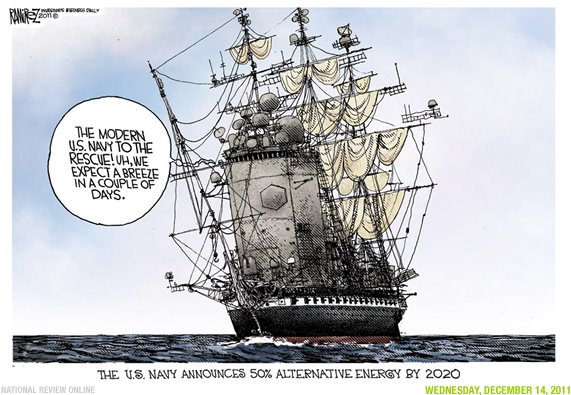
White House to seek $7B in green energy contracts for DoD
- otisptoadwater
-
 Topic Author
- Mountain Legend
-

Less
More
07 Aug 2012 19:44 #1
by otisptoadwater
By Zack Colman - 08/07/12 03:20 PM ET
The White House announced Tuesday it is inviting contract proposals from green energy firms to boost the Army’s use of renewable energy.
The administration is making $7 billion available for the U.S. Army Corps of Engineers to spend on locally-generated biomass, geothermal, solar or wind energy for up to 30 years.
The move is part of a broader White House-led push to green the armed forces, over GOP opposition, which claims the efforts are a waste of taxpayer dollars.
The Defense Department has set ambitious targets, aiming for renewable sources to account for 25 percent of its energy by 2025, with the Army working toward getting 1 gigawatt of power from green sources by that year.
Read more: http://thehill.com/blogs/e2-wire/e2-wire/242593-army-announces-renewable-energy-contracts-as-white-house-continues-green-push
I can explain it to you but I can't understand it for you.
"Any man who thinks he can be happy and prosperous by letting the Government take care of him; better take a closer look at the American Indian." - Henry Ford
Corruptissima re publica plurimae leges; When the Republic is at its most corrupt the laws are most numerous. - Publius Cornelius Tacitus
By Zack Colman - 08/07/12 03:20 PM ET
The White House announced Tuesday it is inviting contract proposals from green energy firms to boost the Army’s use of renewable energy.
The administration is making $7 billion available for the U.S. Army Corps of Engineers to spend on locally-generated biomass, geothermal, solar or wind energy for up to 30 years.
The move is part of a broader White House-led push to green the armed forces, over GOP opposition, which claims the efforts are a waste of taxpayer dollars.
The Defense Department has set ambitious targets, aiming for renewable sources to account for 25 percent of its energy by 2025, with the Army working toward getting 1 gigawatt of power from green sources by that year.
Read more: http://thehill.com/blogs/e2-wire/e2-wire/242593-army-announces-renewable-energy-contracts-as-white-house-continues-green-push
I can explain it to you but I can't understand it for you.
"Any man who thinks he can be happy and prosperous by letting the Government take care of him; better take a closer look at the American Indian." - Henry Ford
Corruptissima re publica plurimae leges; When the Republic is at its most corrupt the laws are most numerous. - Publius Cornelius Tacitus
Please Log in or Create an account to join the conversation.
- ScienceChic
-

- Mountain Champion
-

Less
More
- Posts: 15753
- Thank you received: 320
07 Aug 2012 20:54 #2
by ScienceChic
"Now, more than ever, the illusions of division threaten our very existence. We all know the truth: more connects us than separates us. But in times of crisis the wise build bridges, while the foolish build barriers. We must find a way to look after one another as if we were one single tribe.” -King T'Challa, Black Panther
The truth is incontrovertible. Malice may attack it. ignorance may deride it, but in the end, there it is. ~Winston Churchill
Replied by ScienceChic on topic White House to seek $7B in green energy contracts for DoD
I'd think it would be a tactical advantage to not need fuel to be supplied to either a mobile unit or a base in a foreign country that may or may not be hostile?
"Now, more than ever, the illusions of division threaten our very existence. We all know the truth: more connects us than separates us. But in times of crisis the wise build bridges, while the foolish build barriers. We must find a way to look after one another as if we were one single tribe.” -King T'Challa, Black Panther
The truth is incontrovertible. Malice may attack it. ignorance may deride it, but in the end, there it is. ~Winston Churchill
Please Log in or Create an account to join the conversation.
- Blazer Bob
-

- Mountain Legend
-
Less
More
- Posts: 10452
- Thank you received: 70
07 Aug 2012 21:52 #3
by Blazer Bob
What do you mean? A solar or wind powered tank? I am sure you recognize that whether a tank is powered my diesel or biodiesel, they both have to be brought in.
Replied by Blazer Bob on topic White House to seek $7B in green energy contracts for DoD
Science Chic wrote: I'd think it would be a tactical advantage to not need fuel to be supplied to either a mobile unit or a base in a foreign country that may or may not be hostile?
What do you mean? A solar or wind powered tank? I am sure you recognize that whether a tank is powered my diesel or biodiesel, they both have to be brought in.
Please Log in or Create an account to join the conversation.
- otisptoadwater
-
Topic Author
- Mountain Legend
-
Less
More
- Posts: 7923
- Thank you received: 70
07 Aug 2012 22:03 #4
by otisptoadwater
You would be correct if the alternative sources were already tried and true. They are not and it's the job of agencies like DARPA and NASA to do the homework on a smaller, less expensive scale. Once the new technologies and sources have been proven and the cost of production is lower than conventional source of energy it will be time to integrate alternative sources of energy across the Federal Government.
In the meanwhile, personnel, ships, tanks, aircraft, and other vehicles that are defending our nation need to be ready at all times. Develop new systems in the background and test them until they are proven and cheaper than current sources then integrate them in to the forces in the field.
I can explain it to you but I can't understand it for you.
"Any man who thinks he can be happy and prosperous by letting the Government take care of him; better take a closer look at the American Indian." - Henry Ford
Corruptissima re publica plurimae leges; When the Republic is at its most corrupt the laws are most numerous. - Publius Cornelius Tacitus
Replied by otisptoadwater on topic White House to seek $7B in green energy contracts for DoD
Science Chic wrote: I'd think it would be a tactical advantage to not need fuel to be supplied to either a mobile unit or a base in a foreign country that may or may not be hostile?
You would be correct if the alternative sources were already tried and true. They are not and it's the job of agencies like DARPA and NASA to do the homework on a smaller, less expensive scale. Once the new technologies and sources have been proven and the cost of production is lower than conventional source of energy it will be time to integrate alternative sources of energy across the Federal Government.
In the meanwhile, personnel, ships, tanks, aircraft, and other vehicles that are defending our nation need to be ready at all times. Develop new systems in the background and test them until they are proven and cheaper than current sources then integrate them in to the forces in the field.
I can explain it to you but I can't understand it for you.
"Any man who thinks he can be happy and prosperous by letting the Government take care of him; better take a closer look at the American Indian." - Henry Ford
Corruptissima re publica plurimae leges; When the Republic is at its most corrupt the laws are most numerous. - Publius Cornelius Tacitus
Please Log in or Create an account to join the conversation.
- Blazer Bob
-
- Mountain Legend
-
Less
More
- Posts: 10452
- Thank you received: 70
07 Aug 2012 22:29 #5
by Blazer Bob
Replied by Blazer Bob on topic White House to seek $7B in green energy contracts for DoD
Otis is right. 26$ a gal. for av gas is nuts.
http://www.reuters.com/article/2012/07/ ... B220120719
otisptoadwater wrote:
Science Chic wrote: I'd think it would be a tactical advantage to not need fuel to be supplied to either a mobile unit or a base in a foreign country that may or may not be hostile?
You would be correct if the alternative sources were already tried and true. They are not and it's the job of agencies like DARPA and NASA to do the homework on a smaller, less expensive scale. Once the new technologies and sources have been proven and the cost of production is lower than conventional source of energy it will be time to integrate alternative sources of energy across the Federal Government.
In the meanwhile, personnel, ships, tanks, aircraft, and other vehicles that are defending our nation need to be ready at all times. Develop new systems in the background and test them until they are proven and cheaper than current sources then integrate them in to the forces in the field.
Please Log in or Create an account to join the conversation.
- Photo-fish
-

- Mountain Legend
-
Less
More
- Posts: 3975
- Thank you received: 14
07 Aug 2012 23:25 #6
by Photo-fish
´¯`•.. ><((((º>`•´¯`•...¸><((((º> ´¯`•.. ><((((º>`´¯`•...¸><((((º>´¯`•.. ><((((º>`•´¯`•...¸><((((º> ´¯`•.. ><((((º>`•.´¯`•...¸><((((º>
Replied by Photo-fish on topic White House to seek $7B in green energy contracts for DoD
DoD - Reducing its reliance on fossil based aviation Fuel
http://cnie.org/NLE/CRSreports/07Jul/RL34062.pdf
-One out of eight: Number of U.S. Army casualties in Iraq resulting from protecting fuel convoys.
http://cnie.org/NLE/CRSreports/07Jul/RL34062.pdf
A $10-per-barrel increase in the price of oil costs the Department of Defense approximately $1.3 billion (Nearly equal to entire procurement budget for the U.S. Marines).
-One out of eight: Number of U.S. Army casualties in Iraq resulting from protecting fuel convoys.
´¯`•.. ><((((º>`•´¯`•...¸><((((º> ´¯`•.. ><((((º>`´¯`•...¸><((((º>´¯`•.. ><((((º>`•´¯`•...¸><((((º> ´¯`•.. ><((((º>`•.´¯`•...¸><((((º>
Please Log in or Create an account to join the conversation.
- Something the Dog Said
-

- Mountain Legend
-
Less
More
- Posts: 3444
- Thank you received: 11
07 Aug 2012 23:40 #7
by Something the Dog Said
"Remember to always be yourself. Unless you can be batman. Then always be batman." Unknown
Replied by Something the Dog Said on topic White House to seek $7B in green energy contracts for DoD
That has to be one of the most ludicrous statements of all time. How many defense systems has the Pentagon developed that are cheaper and even proven than current systems? You guys are such tools.otisptoadwater wrote:
Science Chic wrote: I'd think it would be a tactical advantage to not need fuel to be supplied to either a mobile unit or a base in a foreign country that may or may not be hostile?
You would be correct if the alternative sources were already tried and true. They are not and it's the job of agencies like DARPA and NASA to do the homework on a smaller, less expensive scale. Once the new technologies and sources have been proven and the cost of production is lower than conventional source of energy it will be time to integrate alternative sources of energy across the Federal Government.
In the meanwhile, personnel, ships, tanks, aircraft, and other vehicles that are defending our nation need to be ready at all times. Develop new systems in the background and test them until they are proven and cheaper than current sources then integrate them in to the forces in the field.
"Remember to always be yourself. Unless you can be batman. Then always be batman." Unknown
Please Log in or Create an account to join the conversation.
- Photo-fish
-
- Mountain Legend
-
Less
More
- Posts: 3975
- Thank you received: 14
07 Aug 2012 23:43 #8
by Photo-fish
´¯`•.. ><((((º>`•´¯`•...¸><((((º> ´¯`•.. ><((((º>`´¯`•...¸><((((º>´¯`•.. ><((((º>`•´¯`•...¸><((((º> ´¯`•.. ><((((º>`•.´¯`•...¸><((((º>
Replied by Photo-fish on topic White House to seek $7B in green energy contracts for DoD
Do you know how much the first FLIR goggles cost the DoD? Way, WAY more than the present models.
´¯`•.. ><((((º>`•´¯`•...¸><((((º> ´¯`•.. ><((((º>`´¯`•...¸><((((º>´¯`•.. ><((((º>`•´¯`•...¸><((((º> ´¯`•.. ><((((º>`•.´¯`•...¸><((((º>
Please Log in or Create an account to join the conversation.
- FredHayek
-

- Mountain Legend
-
Less
More
- Posts: 31360
- Thank you received: 181
08 Aug 2012 07:34 #9
by FredHayek
Thomas Sowell: There are no solutions, just trade-offs.
Replied by FredHayek on topic White House to seek $7B in green energy contracts for DoD
The military has often been used as a beachhead for liberal ideas, desegregation? Happened first in the military.
But under Obama, not only are we going to radically cut defense, but then force them to use their remaining funds on expensive energy alternatives.
But under Obama, not only are we going to radically cut defense, but then force them to use their remaining funds on expensive energy alternatives.
Thomas Sowell: There are no solutions, just trade-offs.
Please Log in or Create an account to join the conversation.
- LOL
-

- Mountain Legend
-
Less
More
- Posts: 6393
- Thank you received: 18
08 Aug 2012 07:51 #10
by LOL
If you want to be, press one. If you want not to be, press 2
Republicans are red, democrats are blue, neither of them, gives a flip about you.
Replied by LOL on topic White House to seek $7B in green energy contracts for DoD
I thought we had a SPR for energy reserves for the military. And what could be greener than a nu ku lar Carrier or Sub?

If you want to be, press one. If you want not to be, press 2
Republicans are red, democrats are blue, neither of them, gives a flip about you.
Please Log in or Create an account to join the conversation.
Time to create page: 0.178 seconds
sponsors