
- Posts: 15753
- Thank you received: 320
Jeffco Teacher Protests - Colorado Not Adequately Funding Schools
- ScienceChic
-
 Topic Author
- Mountain Champion
-

Less
More
25 Apr 2018 17:45 #1
by ScienceChic
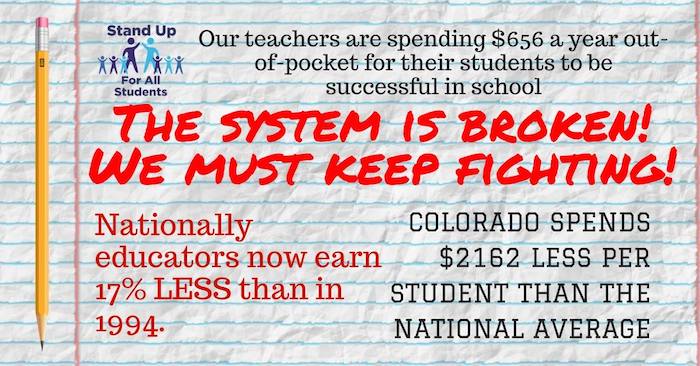
Open Letter from Jeffco Teacher to JeffCo Parents and The Community
April 23, 2018
Pencils Down, Demand More - April 26!
Thursday, April 26 at 9 AM - 5 PM MDT
Colorado State Capitol, 200 E Colfax Ave, Ste 136, Denver, Colorado 80203
"Now, more than ever, the illusions of division threaten our very existence. We all know the truth: more connects us than separates us. But in times of crisis the wise build bridges, while the foolish build barriers. We must find a way to look after one another as if we were one single tribe.” -King T'Challa, Black Panther
The truth is incontrovertible. Malice may attack it. ignorance may deride it, but in the end, there it is. ~Winston Churchill
Open Letter from Jeffco Teacher to JeffCo Parents and The Community
April 23, 2018
My name is a Dale Munholland and for the past 20 years it has been my distinct honor and pleasure to be a high school social studies teacher in Jefferson County Schools. I wanted to take a few minutes to explain to you why I, and thousands of other JeffCo educators, won’t be coming into school on April 26th.
Next Thursday, JeffCo School employees have decided to take a day of action to stand up for our students, our classrooms, our schools and our profession. The vast majority of educators are choosing to take a personal while others are choosing to give up a day’s pay in order to protect public education and ask state legislators to adequately fund education as they are legally bound to do.
Pencils Down, Demand More - April 26!
Thursday, April 26 at 9 AM - 5 PM MDT
Colorado State Capitol, 200 E Colfax Ave, Ste 136, Denver, Colorado 80203
As educators, parents, and community members we are being told by our legislators how much they value us, our students, and our public schools, but their dollars don’t match their talking points. As Jeffco educators we know there is a huge shortfall in education funding. Our pay has been stagnant, our resources have been spread thin, and often we are told we just have to wait for things to get better. We are tired of waiting. On April 26th we need to send a clear message to our legislators - if you value education, it’s time you start investing in us with dollars and not just words.
Come down to the capitol to lobby with our legislators, demand more funding, and tell them that in a booming economy, our schools deserve to be prioritized.
"Now, more than ever, the illusions of division threaten our very existence. We all know the truth: more connects us than separates us. But in times of crisis the wise build bridges, while the foolish build barriers. We must find a way to look after one another as if we were one single tribe.” -King T'Challa, Black Panther
The truth is incontrovertible. Malice may attack it. ignorance may deride it, but in the end, there it is. ~Winston Churchill
Please Log in or Create an account to join the conversation.
- ScienceChic
-
Topic Author
- Mountain Champion
-
Less
More
- Posts: 15753
- Thank you received: 320
25 Apr 2018 18:24 #2
by ScienceChic
"Now, more than ever, the illusions of division threaten our very existence. We all know the truth: more connects us than separates us. But in times of crisis the wise build bridges, while the foolish build barriers. We must find a way to look after one another as if we were one single tribe.” -King T'Challa, Black Panther
The truth is incontrovertible. Malice may attack it. ignorance may deride it, but in the end, there it is. ~Winston Churchill
Replied by ScienceChic on topic Jeffco Teacher Protests - Colorado Not Adequately Funding Schools
Didn't want to overload the original post so that was info from the teachers themselves about tomorrow, this is the Chalkbeat article on the previous walkout. Next, I want to share some info on PERA then I'd love to hear your thoughts.
Why Colorado teachers marched on the state Capitol
By Erica Meltzer - April 16, 2018
Why Colorado teachers marched on the state Capitol
By Erica Meltzer - April 16, 2018
Read more: www.chalkbeat.org/posts/co/2018/04/16/wh...n-the-state-capitol/Chanting “Education is a right! That is why we have to fight!” and “Whose schools? Our schools!” several hundred teachers came to the Colorado State Capitol Monday to call for more school funding and to defend their retirement benefits. They marched down Colfax Avenue and around the Capitol building before filling the halls to lobby legislators and rallying in the rotunda.
Emboldened by teacher strikes and walkouts across the nation, a majority of the teachers from the suburban Englewood district joined the day of action, forcing the district to cancel classes, but the protest was a small shadow of the labor unrest among educators in other states.
In interviews, teachers said they recognize the state’s fiscal constraints. The Taxpayer’s Bill of Rights places a constitutional cap on how much the state budget can grow, even when the economy is good, and requires voters to approve all tax increases. In the afternoon, House Democrats told teachers to go back to their communities and urge voters to approve a major tax increase that could appear on the November ballot.
We asked teachers why they were marching, and this is what they had to say:
"Now, more than ever, the illusions of division threaten our very existence. We all know the truth: more connects us than separates us. But in times of crisis the wise build bridges, while the foolish build barriers. We must find a way to look after one another as if we were one single tribe.” -King T'Challa, Black Panther
The truth is incontrovertible. Malice may attack it. ignorance may deride it, but in the end, there it is. ~Winston Churchill
Please Log in or Create an account to join the conversation.
- ScienceChic
-
Topic Author
- Mountain Champion
-
Less
More
- Posts: 15753
- Thank you received: 320
25 Apr 2018 19:09 #3
by ScienceChic
"Now, more than ever, the illusions of division threaten our very existence. We all know the truth: more connects us than separates us. But in times of crisis the wise build bridges, while the foolish build barriers. We must find a way to look after one another as if we were one single tribe.” -King T'Challa, Black Panther
The truth is incontrovertible. Malice may attack it. ignorance may deride it, but in the end, there it is. ~Winston Churchill
Replied by ScienceChic on topic Jeffco Teacher Protests - Colorado Not Adequately Funding Schools
Going along with the lack of funding for schools and students, there is an effort to dismantle the teachers pension plans, as highlighted below.
Our teachers and our students deserve better. With an economy that is thriving, unemployment as low as it is, there is no reason educators should be struggling as they do. They shouldn't have to get a second job in order to "make ends meet" or afford to live. No one should, for that matter, particularly for a job that requires specialized education.
Why More Than A Million Teachers Can't Use Social Security
April 20, 20186:33 AM ET
Heard on NPR's All Things Considered
Why Teachers Are Walking Out
Posted on April 20, 2018 by Jason Glass
Our teachers and our students deserve better. With an economy that is thriving, unemployment as low as it is, there is no reason educators should be struggling as they do. They shouldn't have to get a second job in order to "make ends meet" or afford to live. No one should, for that matter, particularly for a job that requires specialized education.
Why More Than A Million Teachers Can't Use Social Security
April 20, 20186:33 AM ET
Heard on NPR's All Things Considered
Teachers have staged protests in recent weeks in West Virginia, Oklahoma, Kentucky, Colorado and Arizona. Some are fighting lawmakers who want to scale back their pensions.
It's no secret that many states have badly underfunded their teacher pension plans for decades and now find themselves drowning in debt. But this pensions fight is also complicated by one little-known fact:
More than a million teachers don't have Social Security to fall back on.
Now, these teachers aren't benefit-less. The law requires that states that opt out of Social Security give teachers a pension that is at least as generous.
But there are still risks, Biggs says. For one, many teachers don't spend a full career in the classroom, and some states' pension plans take a decade before teachers see any real benefit.
Why Teachers Are Walking Out
Posted on April 20, 2018 by Jason Glass
In a recently published article in Education Week, Marc Tucker (CEO of the National Center on Education & the Economy) wrote, “Little wonder the teachers are striking. The only question is why it took them so long.”
Here in Jeffco, and across Colorado (and the nation), educators and other staff members working in schools are calling for walk-outs and even outright labor strikes in protest of years of low education funding and proposed reforms to public employee pension systems.
During the years of the Great Recession, education budgets were slashed in Colorado as the economy shrunk – and so did tax collections. The pain of these cuts was clearly felt as districts struggled to serve communities and families while having to reduce the size of their organizations by almost 20% during this period.
Educator walk outs and strikes were not prevalent during this period. I believe most people working in our schools “got it” – that there was less money to go around due to the recession and we would need to make sacrifices like everyone else. So, cuts were made that led to larger class sizes, fewer supports, pay freezes or reductions, and fewer employee benefits.
But once the economy started heating back up, turning into one of the longest periods of sustained economic growth in U.S. and Colorado history, funds have been slow to come back to our schools.
In short, educators have seen the economy in Colorado go red hot, along with things like rising housing costs, but their paychecks have not returned to pre-recession levels compared to inflation.
"Now, more than ever, the illusions of division threaten our very existence. We all know the truth: more connects us than separates us. But in times of crisis the wise build bridges, while the foolish build barriers. We must find a way to look after one another as if we were one single tribe.” -King T'Challa, Black Panther
The truth is incontrovertible. Malice may attack it. ignorance may deride it, but in the end, there it is. ~Winston Churchill
Please Log in or Create an account to join the conversation.
- ScienceChic
-
Topic Author
- Mountain Champion
-
Less
More
- Posts: 15753
- Thank you received: 320
26 Apr 2018 09:01 #4
by ScienceChic
"Now, more than ever, the illusions of division threaten our very existence. We all know the truth: more connects us than separates us. But in times of crisis the wise build bridges, while the foolish build barriers. We must find a way to look after one another as if we were one single tribe.” -King T'Challa, Black Panther
The truth is incontrovertible. Malice may attack it. ignorance may deride it, but in the end, there it is. ~Winston Churchill
Replied by ScienceChic on topic Jeffco Teacher Protests - Colorado Not Adequately Funding Schools
Superintendent Statement On Planned Teacher Actions
Posted on April 25, 2018 by Jason Glass
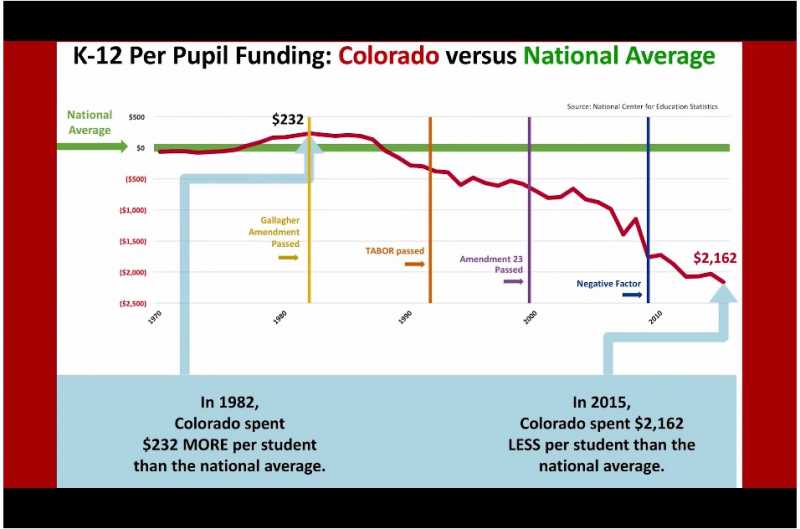
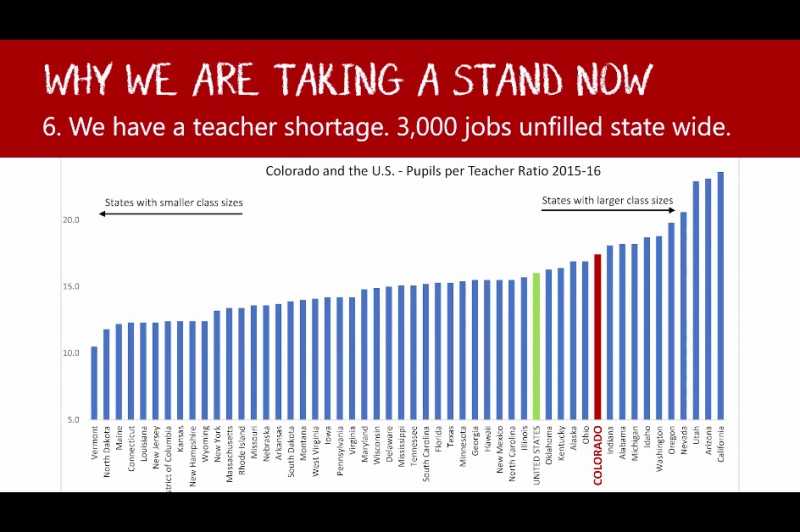
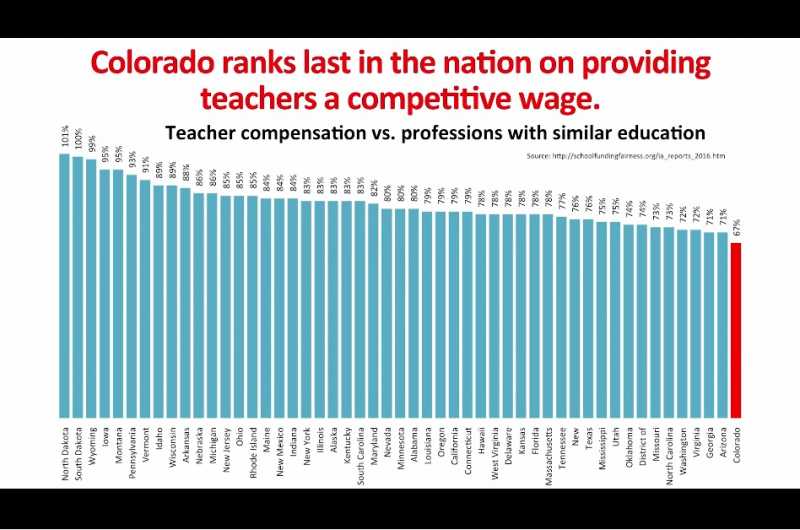
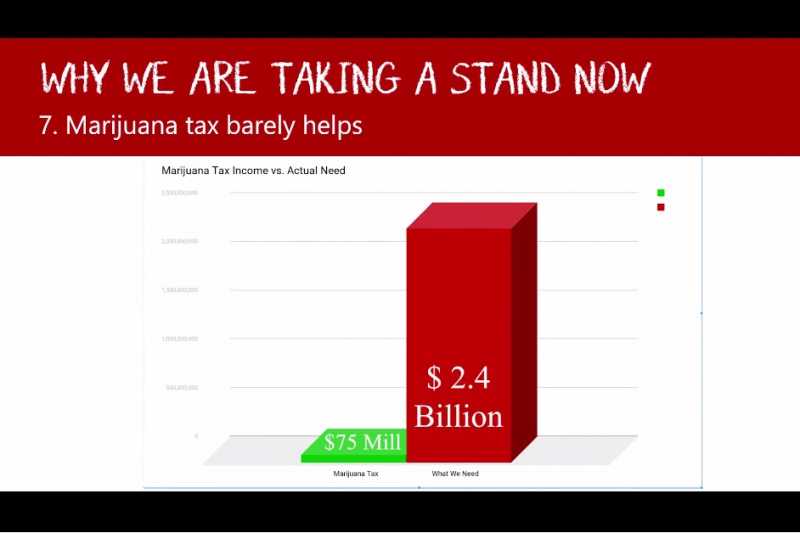
They are fighting for what’s best for kids AND fair for teachers, and they are asking for your support. All screen shots below taken from the "Why We Are Taking a Stand" YouTube video in the OP.
Statewide Education Funding Petitions
Posted on April 25, 2018 by Jason Glass
-Signed by the Superintendents of Jeffco Public Schools, Platte Canyon School District, and Clear Creek School District, along with 13 others.Over the past several months, school superintendents across Colorado have been working in partnership with school boards and community groups to call attention to the dire public school funding issues that plague our state. We strongly believe that our students, our communities, and our educators should receive the supports and compensation they deserve.
As superintendents representing districts that have closed for a day, will be closing for a day, or at some point will see large scale teacher actions occurring in support of increased school funding in Colorado, we would like to offer the following information for your consideration:
- Colorado currently ranks 42nd in the nation in per pupil funding.
- In Colorado, we fund our students at an average of $2,500 per student less than the
national average – not the upper end of the scale – average.- Only two states, Oklahoma and Arizona, spend less than Colorado on services for
students with special needs.- Despite constitutional protections designed to protect public school funding in Colorado, public schools have been underfunded by billions of dollars since 2008.
- Colorado ranked 50th of all states and the District of Columbia in how teacher pay
compares to that of other college-educated workers.- 95 percent of teacher salaries are below the standard of living in rural Colorado.
- Colorado is experiencing a significant teacher shortage. This is compounded in that
close to 20% of teachers leave the profession within the first five years, citing low pay
and low public regard as two leading reasons for leaving the profession.- It is estimated that there is close to $18 billion dollars in school construction needs
across the state.
As they take action over the next several days, and into the future, we urge parents and all concerned Coloradans to contact state legislators to ask them to increase funding for K-12 education in Colorado. Along with educators, your voice matters, and your calls and emails make a difference at the Capitol.
They are fighting for what’s best for kids AND fair for teachers, and they are asking for your support. All screen shots below taken from the "Why We Are Taking a Stand" YouTube video in the OP.
- Our per pupil funding is pitiful compared to other states. Our kids deserve better.
- Our classroom sizes are 41st in the nation - and more and more people are moving here every month.
- Despite the economy booming and unemployment being one of the lowest in the nation, our teachers competitive wages rank dead last. We have great teachers, but if you want to attract and retain the best and brightest, you have to be competitive.
- The marijuana tax is a whole 'nother ball of wax in terms of funding issues that needs to be reformed as well.
Statewide Education Funding Petitions
#GSTC2018It’s time to make a promise to the children of Colorado! We’ve been talking about education funding issues for years. In 2018, we have an opportunity!
Initiative 93, entitled Great Schools, Thriving Communities is here! Support Jeffco Kids has been involved, endorsed, and ready to take action with you!
Sign up with us here – goo.gl/forms/mWQgNe6y1pvNpi4e2
"Now, more than ever, the illusions of division threaten our very existence. We all know the truth: more connects us than separates us. But in times of crisis the wise build bridges, while the foolish build barriers. We must find a way to look after one another as if we were one single tribe.” -King T'Challa, Black Panther
The truth is incontrovertible. Malice may attack it. ignorance may deride it, but in the end, there it is. ~Winston Churchill
Please Log in or Create an account to join the conversation.
- ScienceChic
-
Topic Author
- Mountain Champion
-
Less
More
- Posts: 15753
- Thank you received: 320
26 Apr 2018 09:55 #5
by ScienceChic
"Now, more than ever, the illusions of division threaten our very existence. We all know the truth: more connects us than separates us. But in times of crisis the wise build bridges, while the foolish build barriers. We must find a way to look after one another as if we were one single tribe.” -King T'Challa, Black Panther
The truth is incontrovertible. Malice may attack it. ignorance may deride it, but in the end, there it is. ~Winston Churchill
Replied by ScienceChic on topic Jeffco Teacher Protests - Colorado Not Adequately Funding Schools
Why thousands of Colorado teachers are walking out of class this week - Next on 9News with Kyle Clark
April 23, 2018
14 states hit record-low unemployment
By Reid Wilson - 04/23/18
April 23, 2018
Ten thousand teachers are expected at the State Capitol on Thursday and Friday. The head of Colorado Education Association, the Colorado's largest teachers’ union, says there hasn't been a teachers rally this size in recent memory. The teachers want increased funding for education, changes to their pension system, and higher pay. We asked Kerrie Dallman, the union president, why they're rallying at the Capitol, when its local districts that set teacher pay, and who she wants to see as governor if it’s not Cary Kennedy.
14 states hit record-low unemployment
By Reid Wilson - 04/23/18
Fourteen states have set new records for low unemployment rates in the last year, nearly a decade after the recession put millions of Americans out of work.
Colorado’s unemployment rate is just 2.6 percent, among the lowest in the nation, and a third of the 8.9 percent peak it hit in 2010.
Such a tight job market means businesses are competing for workers, rather than workers competing for scarce jobs. That has some economists combing through data in search of evidence of rising wages, which have been largely stagnant since the recession.
Wages have risen only slowly in recent months.
"Now, more than ever, the illusions of division threaten our very existence. We all know the truth: more connects us than separates us. But in times of crisis the wise build bridges, while the foolish build barriers. We must find a way to look after one another as if we were one single tribe.” -King T'Challa, Black Panther
The truth is incontrovertible. Malice may attack it. ignorance may deride it, but in the end, there it is. ~Winston Churchill
Please Log in or Create an account to join the conversation.
- ScienceChic
-
Topic Author
- Mountain Champion
-
Less
More
- Posts: 15753
- Thank you received: 320
27 Apr 2018 09:26 - 27 Apr 2018 09:28 #6
by ScienceChic
"Now, more than ever, the illusions of division threaten our very existence. We all know the truth: more connects us than separates us. But in times of crisis the wise build bridges, while the foolish build barriers. We must find a way to look after one another as if we were one single tribe.” -King T'Challa, Black Panther
The truth is incontrovertible. Malice may attack it. ignorance may deride it, but in the end, there it is. ~Winston Churchill
Replied by ScienceChic on topic Jeffco Teacher Protests - Colorado Not Adequately Funding Schools
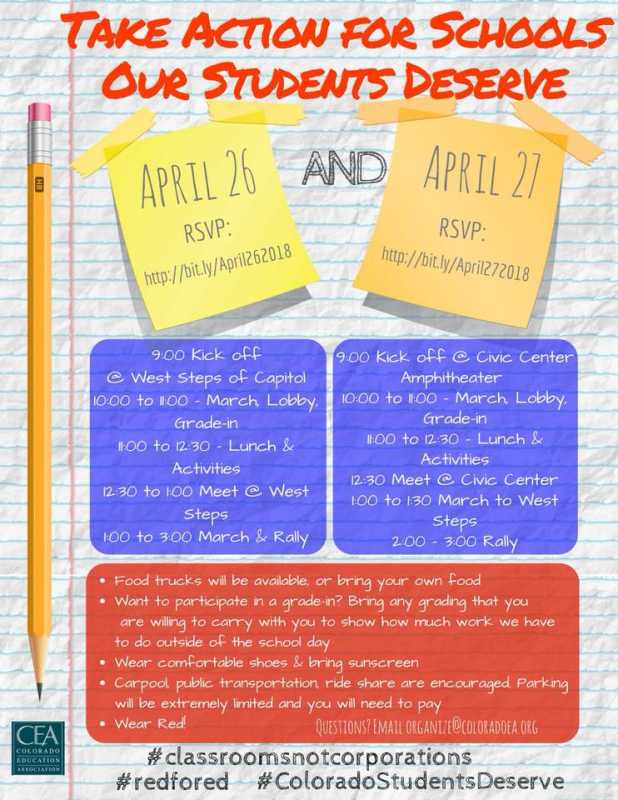
Text: Friday to 64336 for alerts on what's happening where if you are headed downtown.
Edit to add: www.facebook.com/ilike9news/videos/10155...f_t=live_video_share
Edit to add: www.facebook.com/ilike9news/videos/10155...f_t=live_video_share
"Now, more than ever, the illusions of division threaten our very existence. We all know the truth: more connects us than separates us. But in times of crisis the wise build bridges, while the foolish build barriers. We must find a way to look after one another as if we were one single tribe.” -King T'Challa, Black Panther
The truth is incontrovertible. Malice may attack it. ignorance may deride it, but in the end, there it is. ~Winston Churchill
Last edit: 27 Apr 2018 09:28 by ScienceChic.
Please Log in or Create an account to join the conversation.
- Blazer Bob
-

- Mountain Legend
-

Less
More
- Posts: 10452
- Thank you received: 70
28 Apr 2018 07:04 #7
by Blazer Bob
Replied by Blazer Bob on topic Jeffco Teacher Protests - Colorado Not Adequately Funding Schools
koanewsradio.iheart.com/featured/mandy-c...just-got-more-money/
..."ISN'T EIGHT CONSECUTIVE YEARS OF INCREASED SPENDING AND $600 MILLION ENOUGH? Many people are questioning why teachers are walking out NOW to protest education funding. According to our friends at CBS4, lawmakers have been funding education to the tune of $6 billion a year.
This month, they approved the biggest increase in education funding in a decade. The state will spend about $6 billion on K-12 education next school year, which is $600 million more than last year. The additional funding comes after eight consecutive years of increases in education funding. Colorado now spends an average of $13,000 per student — state and local funds combined — or $273,000 for the average 21 student classroom."...
..."ISN'T EIGHT CONSECUTIVE YEARS OF INCREASED SPENDING AND $600 MILLION ENOUGH? Many people are questioning why teachers are walking out NOW to protest education funding. According to our friends at CBS4, lawmakers have been funding education to the tune of $6 billion a year.
This month, they approved the biggest increase in education funding in a decade. The state will spend about $6 billion on K-12 education next school year, which is $600 million more than last year. The additional funding comes after eight consecutive years of increases in education funding. Colorado now spends an average of $13,000 per student — state and local funds combined — or $273,000 for the average 21 student classroom."...
Please Log in or Create an account to join the conversation.
Time to create page: 0.243 seconds
sponsors